

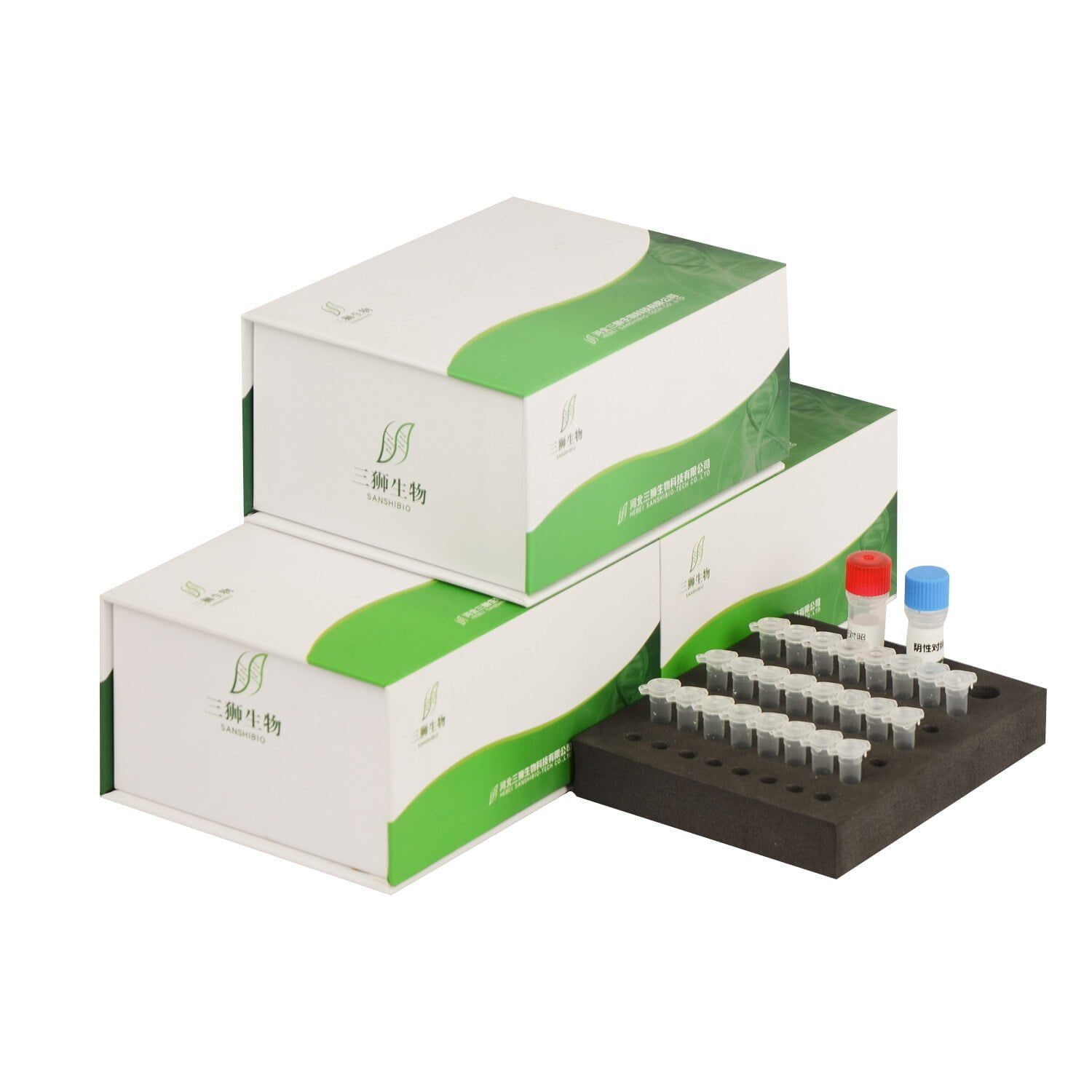
African Swine Fever Reagent Kit 25T
$ 97.10
This product needs to be packed with ice bags and shipped through FedEx or UPS. It will arrive within 7-10 days. The shipping fee is included in the product price. Main Components and Contents: Components DP203-01(25T) DP203-02(50T) DP203-03(100T) Sample Lysis Buffer 6mL/vial 12mL/vial 2× 12mL/vial Instructions Manual 1 1 1 Function and Purpose: Used for detecting target nucleic acids in various samples including whole blood, serum, lymph nodes, spleen, muscles, and others. Dosage and Determination: 1.1 Sample Processing 1.1.1 Whole Blood and Liquid Samples: Collect blood directly into commercially available EDTA anticoagulant tubes. Use 200μL of fresh animal blood or other liquid samples for further processing. 1.1.2 Tissue Samples: Take approximately 1g of tissues such as spleen, lymph nodes, or muscles. Sterilize with high pressure (121°C, 20 minutes), cut into pieces using sterile scissors, take 0.1g into a mortar or tissue homogenizer, and add 1.5mL of saline solution for homogenization. Transfer this sample into a 1.5mL centrifuge tube, centrifuge at 8000g for 2 minutes, and collect the supernatant for further use. 1.2 Nucleic Acid Extraction 1.2.1 Take the required number of centrifuge tubes and add 190μL of sample lysis buffer. 1.2.2 Add 10μL of the collected sample (whole blood, tissue sample, etc.) separately into the tubes with lysis buffer. Vortex for 10 seconds to mix thoroughly. 1.2.3 Momentarily centrifuge for 5 seconds and collect the supernatant as the extracted sample nucleic acid for further use. Precautions (1)Before experimenting, carefully read through this reagent kit manual and strictly follow the operational procedures. (2)All reagents should be stored at designated temperatures as indicated on the reagent labels. Avoid repeated freezing and thawing. Sample specimens should be freshly collected, transported at 2-8°C, and, for long-distance transport, with dry ice. (3)Pre-processing should be carried out in a biosafety cabinet using dry ice. After the experiment, subject all samples and materials used to high-temperature sterilization. (4)To prevent cross-contamination, operate in an environment as free from nucleases as possible and segment the experimental process (reagent preparation area, sample preparation area, amplification area, etc.)
Related products
-
-

-

Migi (Cat) Feline Herpes Virus Antigen (FHV-Ag) Rapid Quantitative Test Kit
$ 45.00Superior Hybrid | Superior Indica | Superior Sativa This product has multiple variants. The options may be chosen on the product page